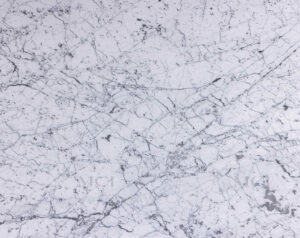


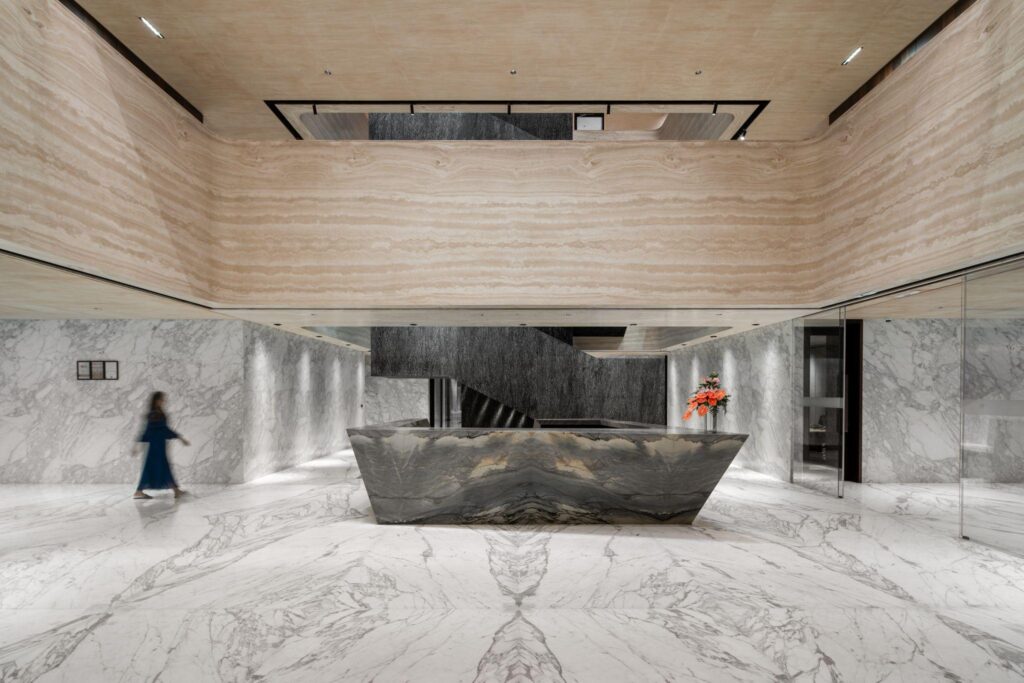
Italian marble remains one of the most sought-after natural stones for residential and commercial interiors, prized by homeowners, architects, and designers for its elegance, durability, and timeless appeal. Its premium finishes and distinctive veining make it a hallmark of luxury design worldwide. What follows is a considered introduction to the stone itself and how to recognise its finest expressions. It also delves into where a stone belongs within a space and how to choose and care for it with the assurance of someone who already knows its worth.
What is Italian Marble
Italian marble is among the world’s most sought-after natural stones, celebrated for its bright, crystal-like lustre and luxurious appearance. Its story begins in Carrara and the Apuan Alps of Tuscany, among the world’s oldest and most celebrated marble regions.
Over millions of years, limestone undergoes intense heat and pressure to transform into marble, resulting in the fine crystalline texture and distinctive veining that define its expressive and luxurious character, setting it apart from other natural stones. This geological origin is precisely what gives Italian marble its premium appearance, a depth of colour, translucency, and vein movement that’s difficult to replicate in other stones.
Beyond its physical beauty, Italian marble carries a legacy deeply rooted in art and architecture. This same stone has shaped some of history’s most iconic creations, from Michelangelo’s David and Pietà to the marble-clad monuments of ancient Rome, and that heritage still shapes how the stone is perceived today.
Today, Italian marble continues to define luxury interiors, from private residences to distinguished hospitality spaces. Its enduring desirability comes from its natural rarity, remarkable durability, and the individuality of every slab.
Why Italian Marble is the Preferred Choice for Luxury Homes
Italian marble continues to be the material of choice for architects and homeowners building distinctive spaces. Several defining qualities contribute to its position as one of the world’s most prestigious natural stones:
- Purity and lustre: Italian marble from the Carrara and Apuan Alps regions consists of pure metamorphic limestone with minimal trace minerals, which gives it a bright white base colour and high light refraction for a distinct visual depth
- Storied provenance: Originating from the same Tuscan region that supplied Renaissance sculptors, its heritage is singular to Italy
- Italian expertise: Beyond its geological origin, it is distinguished by generations of craftsmanship, where skilled processing techniques enhance the stone’s natural variations and reveal its full aesthetic potential
- Premium finish options: Polished, honed, and textured finishes suit different design intents
- Prestige and desirability: Rare and iconic Italian marbles are highly sought after, which can enhance the perceived exclusivity and luxury of a property
- Timeless heritage: Italian marble brings centuries of Italian architectural and design heritage into contemporary spaces
Discover the 5 Most Exquisite Types of Italian Marble
Every type of Italian marble tells a different story through its colour, veining, and geological origin. Discover the iconic varieties that influence the mood, materiality and design language of a space.
Bianco Carrara Marble
Bianco Carrara marble is one of the most well-known marble varieties from Italy, known for its soft white background and subtle grey veining. Its bespoke aesthetic makes it a versatile choice for flooring, walls and countertops in both contemporary and classic interiors. This is because the veining is gentler than other Italian varieties; it tends to sit at a more accessible point within the premium marble category.
Statuario Marble
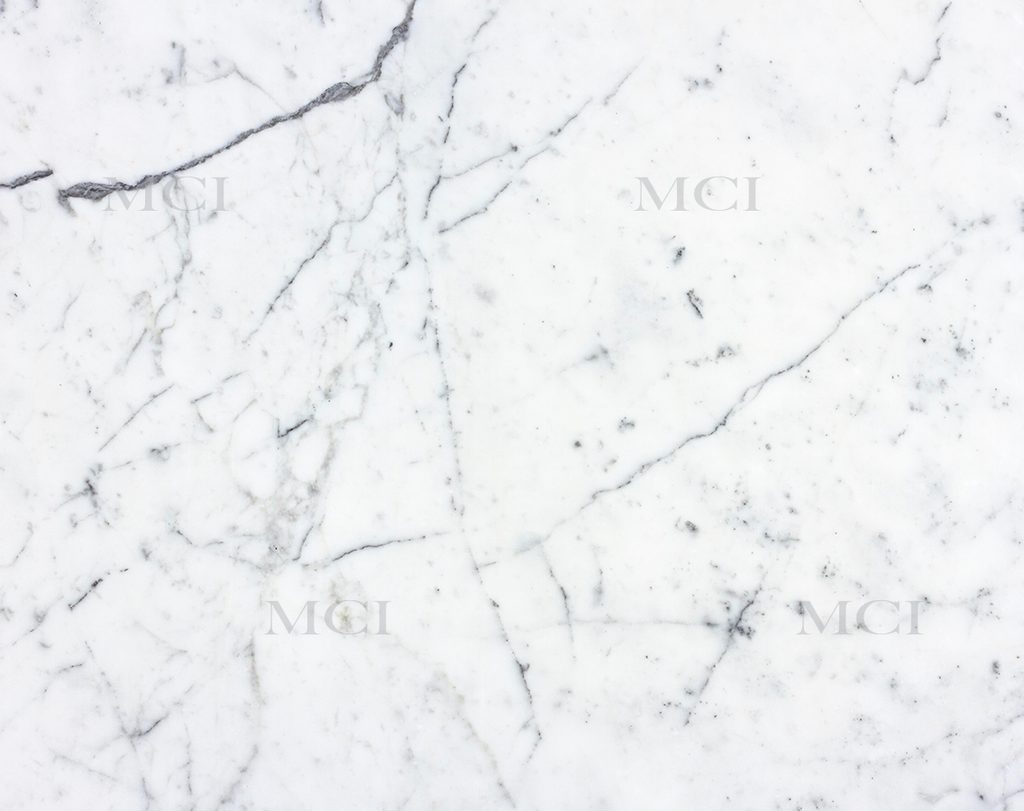
Statuario marble is among the most prestigious Italian marble varieties from the Carrara region. Rather than being a single type of stone, Statuario comprises several distinct varieties, each characterised by its own interplay of bold grey veining, subtle tonal variations, and, in some cases, delicate hints of gold. This natural diversity ensures that every slab is truly one of a kind. Its lustrous white base, traced with soft grey veining that flows like a river, gives a sense of expansiveness to any space. This breathtaking rarity places Statuario at the absolute pinnacle of luxury Italian stone.
Calacatta Marble
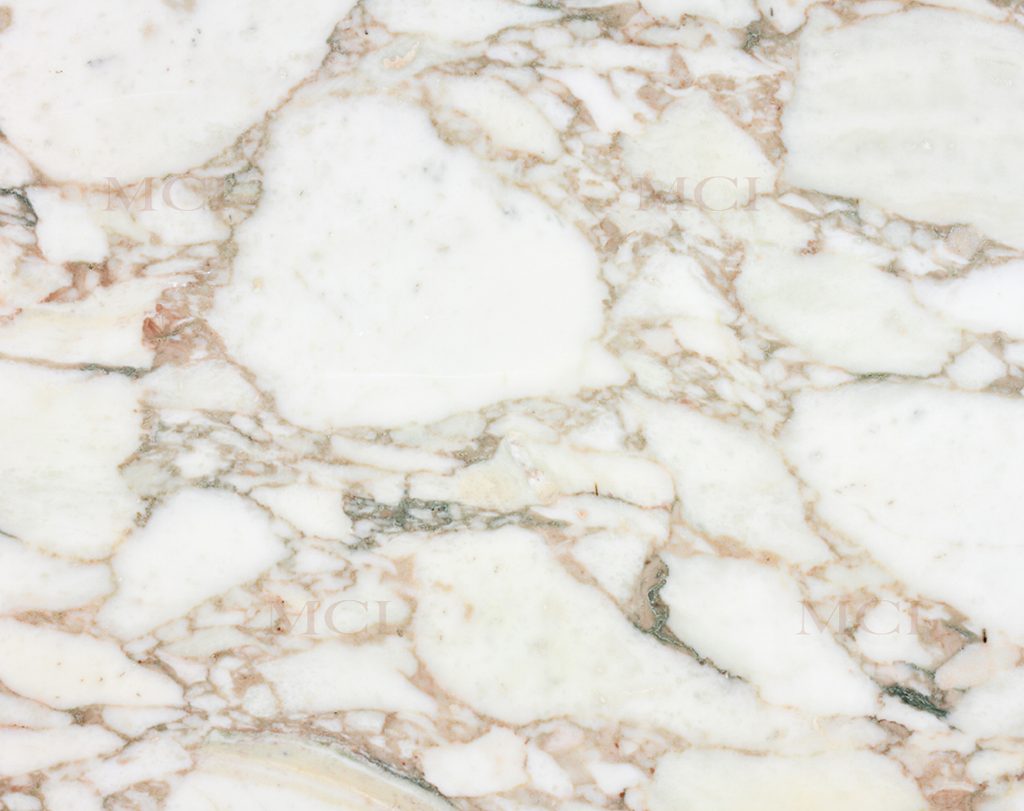
Calacatta Oro marble is admired for its serene blend of radiant white tones, soft grey veining and delicate natural movement. Its graceful patterns create a balance between subtlety and visual impact by bringing a sense of calm and purity to any space. A preferred choice for designer kitchens, luxury bathrooms, and statement surfaces, it transforms every application into a focal point of the space. With its limited availability compared to many other Italian marble varieties, genuine Calacatta is valued for its rarity, individuality, and enduring appeal among the world’s finest natural stones.
Bottochino Classico Marble
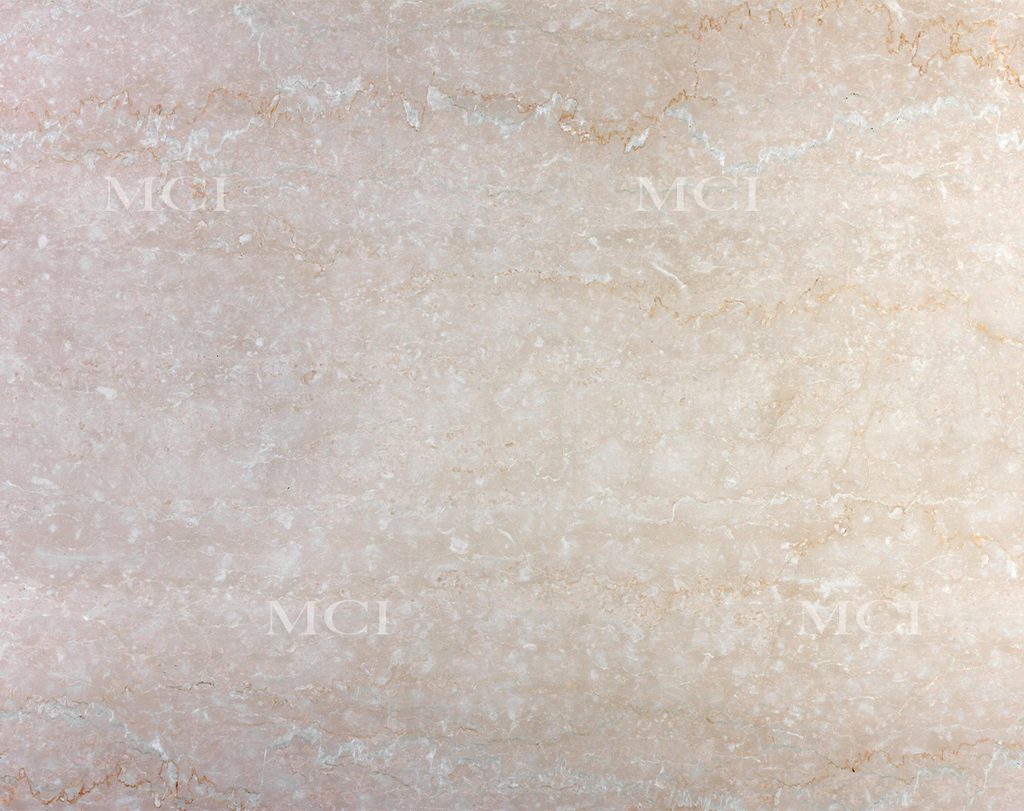
Bottochino Classico marble captures the quiescence of a Mediterranean morning with a warm beige base complemented by fine, understated veining. A distinctive expression of classic Italian marble, it reflects a refined simplicity that suits traditional and contemporary interiors alike. It’s a durable, forgiving choice for flooring, and its warm tones pair naturally with wood and brass finishes.
A Lasting Investment in Stone: 6 Reasons to Choose Italian Marble
The price of Italian marble can vary significantly from one project to another, with no single figure applying across the board. Instead of focusing on a fixed price per square foot, it is more useful to understand the factors that influence the cost of each slab and installation:
- Marble type: Rarer veining patterns (Calacatta, Statuario) cost more than widely available types (Carrara, Bottochino)
- Slab thickness: Thicker slabs require more raw material and cost proportionally more
- Finish: Finishes developed using advanced CAD and CNC technology, precision cutting, and bespoke edge profiling can increase the overall processing cost
- Provenance: Genuine Italian marble can command a higher price due to its provenance, rarity, specialised processing and import logistics
- Vein continuity: Bookmatched slabs showcase the natural beauty of marble by aligning adjoining slabs to create a seamless, mirror-like flow of veining. This striking visual effect, combined with the rarity of sourcing perfectly matched natural stone, makes them highly prized and often commands a premium.
- Installation complexity: Bookmatching, detailed cladding, curved surfaces and complex cuts require greater precision and skilled labour
- Transportation: The careful freight and handling behind every imported slab is part of the journey that brings authentic Italian marble to your space
As every project calls for a different stone, scale and finish, the value of Italian marble is best understood through a more considered evaluation of the specific requirements. A personalised enquiry based on the chosen marble, application, area and finish allows for a more accurate understanding of the investment involved.
Best Italian Marble for Flooring
Flooring demands a thoughtful balance of beauty, durability and practicality. The right Italian marble brings depth and character to a space while offering the resilience required for everyday living. Factors such as the marble’s density, finish, and intended application all play a role in determining the ideal choice for each space.
Living rooms benefit from Statuario or Calacatta, whose bold veining creates a genuine visual anchor and rewards a floor built for presence rather than just function. Bedrooms suit the calmer disposition of Carrara or Bottochino, whose gentler veining and warmth make them easier to live with underfoot day after day.
Kitchens perform best with a honed finish, since it resists everyday marks far more gracefully than a high polish. Bathrooms call for denser, less porous marble paired with a sealed, slip-resistant finish, to manage constant moisture without compromising on beauty. Commercial spaces favour durable, consistent-veining slabs capable of holding their character under heavy footfall.
To explore these celebrated Italian marble varieties in greater detail, discover the curated collection at Marble Centre International, where specialists offer expert guidance in selecting the ideal stone for every project.
Italian Marble for Home: Curated Applications for Every Space
The beauty of Italian marble lies in its versatility, with different varieties lending themselves to the character and demands of each space.
Living Room
The living room offers an expansive canvas for the expressive beauty of Italian marble, whether across a seamless floor or as a dramatic bookmatched feature wall. By mirroring the natural veining across adjoining slabs, bookmatching transforms the inherent character of the stone into a striking visual composition. Statuario and Statuario Linea, alongside Calacatta Oro, both suit this application well, giving the space a genuine sense of scale and craftsmanship.
Kitchen
In the kitchen, Italian marble typically appears as countertops and backsplashes, where its natural elegance meets daily practical demands. Marble is naturally porous, so kitchen surfaces need regular sealing to resist staining from oil, acid and pigment. With that maintenance in place, a marble island or countertop remains one of the most distinctive design choices a kitchen can make.
Bathroom
Bathrooms benefit from marble on vanity tops, flooring, and shower walls, where its cool, tactile surface pairs naturally with a spa-like design language. This is because bathrooms deal with constant moisture, a honed or leather finish combined with proper sealing is essential. This keeps surfaces both moisture-friendly and slip-resistant, without sacrificing the material’s natural beauty.
Staircases & Feature Walls
Staircases clad in Italian marble bring a sense of occasion to a home’s most transitional spaces, while feature walls, behind a TV unit or framing an entrance lobby, let a single dramatic slab do the visual work. These are typically lower-traffic applications compared to flooring, which opens the door to bolder, more expressive marble choices like Calacatta or Statuario.
Selecting Italian Marble: A Few Considerations
Choosing Italian marble is a considered decision, one best guided by expertise rather than instinct alone. At Marble Centre International, our specialists work closely with each client to assess provenance, slab quality, and finish, guiding every selection with the knowledge that comes from decades in the trade.
- Authentic Italian Provenance: Sourced from renowned Italian quarries, every block is hand-picked for consistency of aesthetics and strength and carries the authenticity and distinctive character of its origin
- Established Sourcing Network: MCI’s longstanding relationships with renowned Italian quarries and an established physical presence bring greater transparency, expertise, and confidence to the selection of Italian marble
- In-person slab assessment: Digital screens and small samples can never fully capture a slab’s natural translucency or subtle vein movement. At the MCI Experience Centre, clients can view fully finished large-sized slabs under natural lighting alongside specialists, ensuring transparency of quality and confidence in the final stone selection.
- Consider the finish: The right finish is an important part of the selection process, which reveals the depth, movement, and character within natural stone. At MCI, bespoke finishes are carefully crafted to enhance the stone’s inherent beauty while complementing the character and application of each space
Italian Marble Finishes: Choosing the Right Surface
A marble finish is the final treatment applied to the surface of a stone, and it has the power to completely transform a space. It’s what brings a room to life, adds a touch of drama, or makes a space feel expansive and bright.
Finish | Description | Ideal Applications |
| Polished | High-gloss, reflective surface that intensifies colour and veining | Living rooms, statement floors |
| Honed | Smooth, matte surface with a softer, understated look | Kitchens, high-traffic flooring |
| Leather | Textured, low-sheen finish with a tactile surface | Bathrooms, feature walls |
| Brushed | Slightly weathered texture for an aged, organic look | Traditional interiors, exteriors |
| Matte | Flat, non-reflective finish that hides marks well | Busy household areas, commercial spaces |
Italian Marble Installation Best Practices
Even premium marble slabs can underperform if the installation itself is rushed or done without the right expertise. Getting a few fundamentals right at this stage protects the investment for decades:
- Ensure the sub-floor or wall surface is level, clean, and fully cured before installation
- Handle and transport slabs carefully, marble can crack under uneven pressure
- Use the adhesive appropriate to the slab’s thickness and the surface it’s being installed on
- Maintain consistent joint spacing for a clean, professional finish
- Seal the marble immediately after installation, before it’s exposed to daily use
- Work with an experienced installation team rather than a general contractor unfamiliar with natural stone
Italian Marble Maintenance Tips
Italian marble is a natural stone that develops character over time. With thoughtful care and regular maintenance, its inherent beauty, elegance, and finish can be preserved for generations.
- Clean gently: Use a pH-neutral stone cleaner, stone soap, or a mild detergent with warm water, never acidic or abrasive products
- Act quickly on spills: Blot wine, oil, coffee and other acidic spills immediately, then rinse with a mild, pH-neutral soap and dry with a soft cloth
- Treat stains promptly: Oil marks generally lift with a gentle cleaner or mineral spirits, metal stains often need a poultice, and water rings buff out with fine steel wool
- Seal thoughtfully: An impregnating sealer offers better long-term protection than a topical one. Reseal every 6 to 12 months depending on traffic; sealing improves stain resistance rather than making the stone stainproof
- Protect the surface: Use coasters and trivets to avoid etching and heat marks, and avoid dragging furniture across marble flooring
- Polish periodically: Restore surface shine as foot traffic dulls it over time
Frequently Asked Questions
1. What is Italian Marble?
Italian marble is a type of natural marble quarried in Italy, prized for its distinctive veining, premium appearance, and long history as a luxury building material.
2. Which is the best Italian Marble for flooring?
It depends on the room. Carrara and Bottochino suit calmer, high-traffic spaces, while Statuario and Calacatta work well as statement floors in living rooms.
3. How much does Italian Marble cost?
Cost varies by type, slab quality, finish and installation complexity. Each project is priced individually. Send an Enquiry with your project details for an accurate quote.
4. What is the price per square foot of Italian Marble?
Price per square foot depends on the marble type, thickness and finish, so it’s best confirmed for a specific requirement rather than assumed from a general figure.
5. Is Italian Marble suitable for kitchens?
Yes, with proper sealing. Marble is porous, so kitchen surfaces need regular sealing and prompt spill clean-up to prevent staining.
6. How do I maintain Italian Marble?
Clean with pH-neutral products, reseal periodically, wipe up spills quickly, and avoid abrasive cleaners or dragging heavy objects across the surface.
7. Which finish is best for Italian Marble?
It depends on use: polished for visual impact in low-traffic areas, honed or leather finishes for kitchens and bathrooms where slip resistance and marks matter more.
8. How long does Italian Marble last?
With proper installation and regular maintenance, Italian marble can last for decades, it’s one of the most durable natural building materials available.
9. Is Italian Marble better than Indian Marble?
Italian marble is prized for fine veining, lustre and a premium finish; Indian marble offers a more budget-conscious option, depending on design intent.
10. Where can I buy authentic Italian Marble?
Visit the Marble Centre International Experience Centre in Bangalore, or send an enquiry to schedule a personalised consultation and see the collection first-hand.