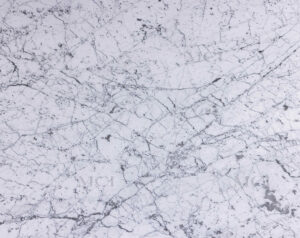



Identifying high-quality Italian marble takes more than an eye for a beautiful slab. It calls for evaluating authenticity, genuine Italian marble grading, vein continuity and bookmatching potential, finish, and slab specification, alongside the craftsmanship behind how a slab is cut, reinforced and polished.
This guide sets out what architects, designers and discerning homeowners should actually look for before specifying premium Italian marble for a project.
Why Quality Is the Real Investment in Italian Marble
Marble is a natural material, and quality is what determines whether a slab ages into character or simply wears out. A well-sourced, correctly processed stone holds its density, colour and finish for decades, while a poorly selected one can dull, stain or crack within a few years of installation, regardless of how attractive it looked in the showroom.
At Marble Centre International, four decades of working with luxury Italian marble have shown that this durability begins long before installation. Selecting raw blocks with fewer natural fissures, cutting them with precision gangsaws, reinforcing them with high-quality resins, and finishing them with advanced polishing techniques all contribute to a slab that performs as beautifully as it looks.
The Marks of Genuinely High-Quality Italian Marble
Knowing how to identify Italian marble of genuine quality starts with looking past the label and toward its actual characteristics, several of which work together rather than standing alone.
- Superior blocks carefully selected at the quarry for consistent base colour and minimal fissures
- Natural veining with a distinct and harmonious flow across the slab
- Structural integrity that supports lasting performance across applications
- Careful calibration and processing for a smooth, uniform surface
- Finish quality, judged under natural light rather than showroom lighting alone
Verifying Authenticity: What Genuine Italian Marble Requires
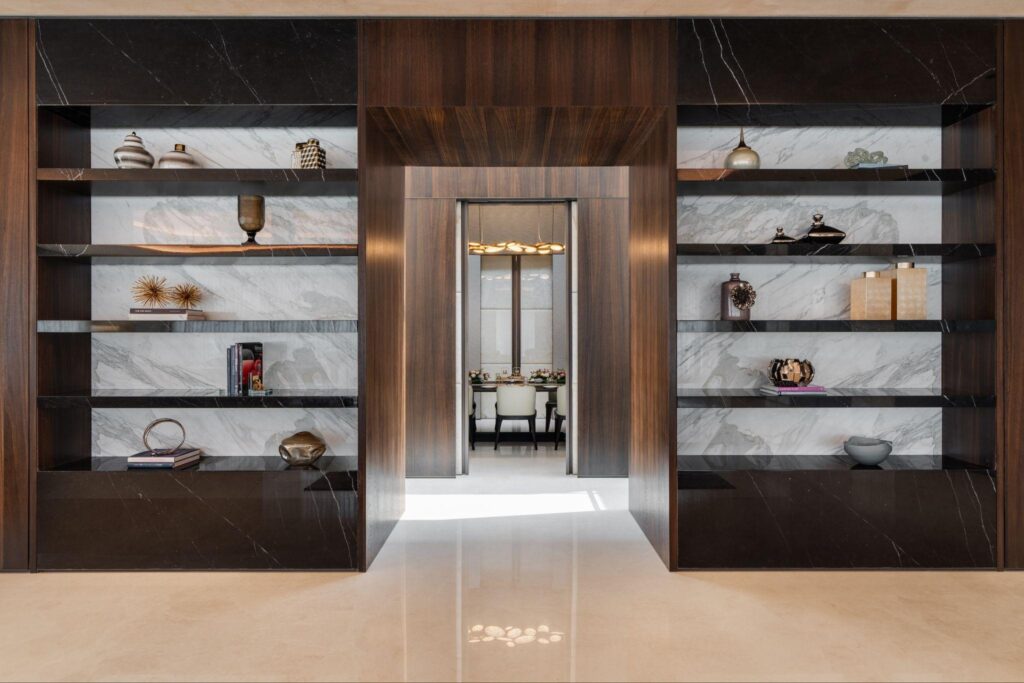
Authentic Italian marble can be distinguished from imitation or domestic look-alikes through a handful of concrete checks, not guesswork.
- Confirm the country of origin directly with the supplier
- Ask for supplier certifications and import documentation
- Request quarry information tied to the specific slab
- Review paperwork confirming the marble was genuinely imported, not domestically quarried or composite
- Compare the slab’s veining and density against known characteristics of the named variety
- Verify against a supplier with an established, traceable quarry network
What “Grading” Really Means for Italian Marble
There is no single, universally accepted grading system for natural marble. Any label a supplier attaches carries no fixed, industry-wide meaning, which makes Italian marble grading less about a name and more about verifying the actual characteristics covered above: density, veining, finish and structural integrity, slab by slab. A trusted supplier will speak in these specific terms rather than a generic tier, and that specificity is itself a sign of expertise worth taking seriously.
Italian Marble Varieties Worth Knowing
Different Italian marble types carry their own character, and knowing their traits helps match stone to project.
White Italian Marble
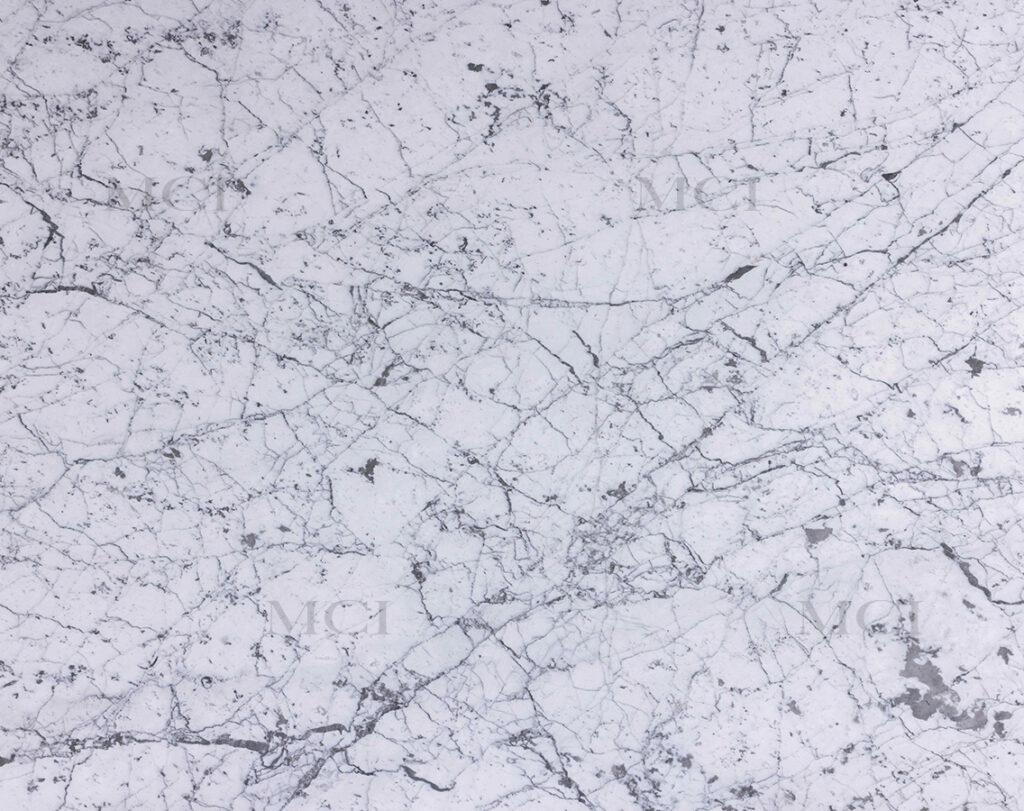
White Italian marble is prized for its bright base and restrained veining, a versatile foundation for luxury interiors that suits everything from flooring to feature walls without ever competing with a room’s other details.
Calacatta Gold Marble from Italy
Calacatta Gold marble from Italy, known in Marble Centre International’s own collection as Calacatta Oro, carries bold, flowing gold veining against a soft white base. Its rarity and unmistakable presence make it a favourite for designer kitchens and other spaces built around a single, unforgettable slab.

Carrara Marble
Carrara, exemplified in MCI’s collection by Bianco Carrara, carries a softer grey veining and greater versatility, making it a dependable, more accessible choice across residential applications.
Statuario Marble
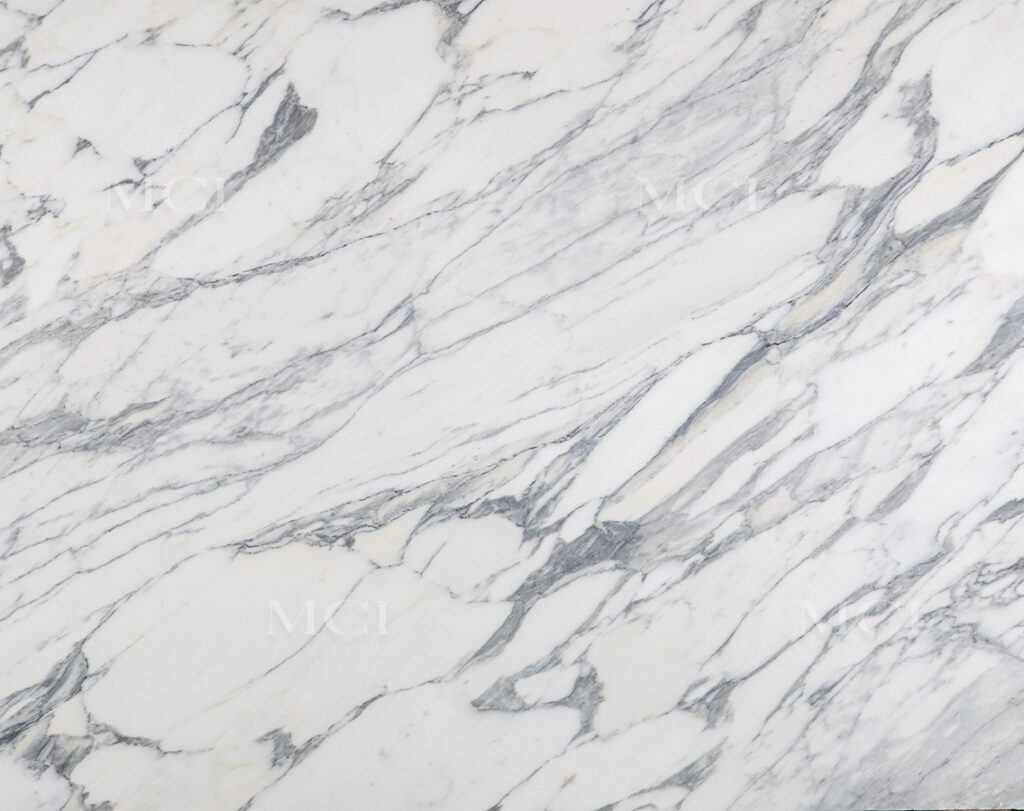
Statuario combines a premium white background with dramatic, bolder veining than Carrara, a rarity that places it firmly among the varieties reserved for genuinely exclusive, statement-led projects.
Italian Marble Selection Tips for a Considered Specification
These Italian marble selection tips apply whether the project is a single room or an entire building, since the fundamentals of a sound selection don’t change with scale.
- Inspect natural variation across the full slab, not a small sample
- Verify dimensions against the specified thickness and application
- Check finish quality in natural, not artificial, light
- Compare multiple slabs from the same batch before deciding
- Review certifications and documentation before committing
- Match the chosen marble to its intended application, not just its appearance
Choosing a Supplier Worthy of the Stone
Knowing where to buy Italian marble matters as much as which variety to choose. The right Italian marble suppliers distinguish themselves well before a single slab is chosen. Reputation, genuinely imported inventory, and a considered approach to slab selection all matter, but so does what happens after the sale.
- A track record built on reputation rather than price alone
- A genuinely imported, traceable inventory of Italian marble slabs
- Guided slab selection rather than a self-service showroom
- Project consultation tailored to the specific application
- Support through installation, not just the point of sale
- After-sales service for sealing, maintenance and future queries
Italian Marble for Home: A Room-by-Room Perspective
Choosing Italian marble for home interiors depends on how each space is used, since the same slab rarely suits every room equally well.
Living Room
Living rooms carry premium flooring and feature walls particularly well, where a single, dramatic slab can define the room’s entire aesthetic without competition from busier patterns.
Kitchen
Kitchens call for careful finish selection, since countertops and backsplashes face daily wear, and a honed or properly sealed surface protects the stone without dulling its character.
Bathroom
Bathrooms benefit from marble across vanity tops, wall cladding and flooring alike, provided moisture considerations, sealing and a slip-resistant finish are addressed from the outset.
The Italian Marble Quality Checklist
Before finalising a purchase, this Italian marble quality checklist brings every prior consideration into one final review:
- Authenticity confirmed through documentation and origin
- Grading understood as verified characteristics, not a generic label
- Finish appropriate to the room and its daily use
- Slab thickness matched to the application
- No visible cracks or unexplained fissures
- Colour and veining consistency across the full order
- Dimensions verified against the project’s exact requirements
- Supplier credibility independently verified
- Installation planned with an experienced team
- Warranty or guarantee terms confirmed in writing
Frequently Asked Questions
How do I identify high-quality Italian marble?
Assess veining clarity, colour consistency, density, finish and verified origin together, not any single trait.
How can I verify authentic Italian marble?
Request supplier certifications, import documentation and quarry information tied to the specific slab.
What is Italian marble grading?
There’s no universal system; genuine quality comes from verified characteristics, not a generic label.
Which Italian marble type is the best?
It depends on application: Statuario and Calacatta for statement spaces, Carrara for everyday versatility.
Is Calacatta Gold Marble worth the investment?
For a defining feature space, yes, given its rarity and unmistakable presence.
Should I choose Italian marble slabs or tiles?
Slabs suit statement surfaces and continuity. Italian marble tiles suit smaller-format or budget-conscious applications.
How do I select the right Italian marble supplier?
Look for genuine imported inventory, guided selection, and support beyond the sale.
What should I inspect before buying Italian marble?
Veining, colour consistency, finish, thickness, and documentation confirming authenticity.
Which Italian marble is best for home interiors?
It depends on the room; Carrara suits versatility, Statuario or Calacatta suit statement spaces.
How long does premium Italian marble last?
Decades, provided it’s correctly sealed, finished and maintained over time.
For guidance on specifying or sourcing genuine Italian marble, Marble Centre International’s specialists are available to advise. Visit the Experience Centre in Bangalore, or send an enquiry to begin.